


What Is Automation? – A Super Hot Career in the Near Future
What is automation? What career opportunities are available in the automation industry? What should you study, where should you study, and what jobs can you do after graduation? All answers will be revealed right below!
1. Automation Industry
Nowadays, the increasing consumer demand has led to the requirement for industrial production lines to become more modern and produce goods with higher productivity. The process of creating products on these industrial production lines is known as production automation. Today, the demand for automated production is growing rapidly, requiring the use of modern control technologies with the assistance of computers. Humans alone can no longer supervise and inspect these processes manually. From this, the components forming the automation industry have emerged.
2. What Is Automation? What Is an Automation Job?
Automation is a technology field that operates based on the application of modern mechanical techniques, automatic control systems, and computer software to automatically operate and control the entire production process.
Many people consider this job boring because it involves repeating production processes. Is that all? Not exactly! This job does not only involve standing by machines and repeating tasks. An automation engineer must manage and operate automated equipment in production lines such as cement factories, beer factories, automated infrastructure installation, and more.
An automation engineer must ensure the implementation of automation tasks such as monitoring control systems, detecting system errors for timely correction to perfect system performance, as well as operating, maintaining, and servicing automated electrical systems.
Currently, automation jobs are highly sought after by many enterprises on job search platforms. These positions also offer some of the most attractive salaries today. Therefore, do not miss out on these appealing career opportunities.
3. The Role and Importance of Control Engineering and Automation
As the name implies, automation refers to the operation of production lines using modern technology to replace human labor with automated machinery for manufacturing goods. Imagine a future where every factory owns robots producing goods automatically. How convenient that would be! Humans would no longer perform repetitive production tasks but instead supervise and control machinery with highly experienced teams.
This scenario demonstrates the advancement of industrialization, bringing convenience by replacing human physical labor with machine operations. Humans manage instead of performing strenuous manual work. This highlights the vital role of this industry in modernizing industrial production lines in factories and enterprises.
4. Career Opportunities in Control Engineering and Automation
Automation is not a new field. It has been repeatedly listed among the HOT career sectors of the year. Therefore, it has been strongly developed alongside industrial growth. Graduates in automation can work in research positions at the Institute of Electronics – Informatics – Automation, technology application institutes, IC design centers, high-tech parks, etc. They can become lecturers or researchers in automation at universities offering automatic control majors domestically and internationally, depending on qualifications. They can also work in domestic and foreign manufacturing enterprises across various industries.
Despite the attractiveness of the automation industry in Vietnam and developed countries such as Russia and Germany, the number of applicants for Automation Engineer positions remains low. This may be due to limited awareness or the perception that the job is dry, causing enterprises to constantly face labor shortages.
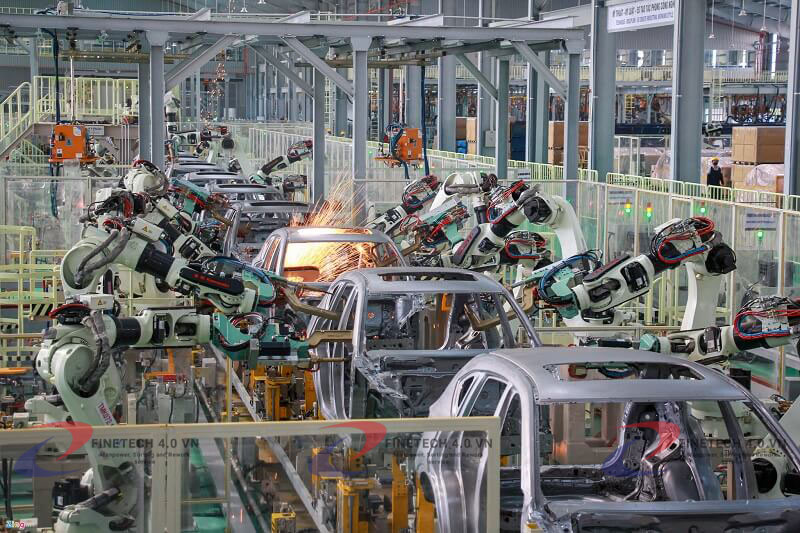
Automation career opportunities
5. Specialized Job Titles and Roles of an Automation Engineer
-
Design Engineer (designing automation systems for factories and enterprises);
-
Application Programming Engineer (programming control systems for microprocessors, PLCs, CNCs, programmable controllers);
-
Consultant (providing automation solutions, participating in employee training and education programs);
-
Operation and Maintenance Engineer (ensuring operation, maintenance, and repair of electrical, electronic, and automation systems);
-
Electrical Automation Engineer (operating and maintaining automated systems in factories);
-
System Specialist (analyzing automation system needs for companies and factories);
-
Project Manager (designing, installing, and implementing automation projects).
Automation engineers often work in modern industrial production lines such as motorcycle assembly lines, water and power plants, aviation automation systems, food processing factories, oil and gas industries, cement production lines, paper manufacturing, textiles, wastewater treatment systems, etc. In agriculture, automation is applied in clean vegetable cultivation systems and plant growth control. It is also used in traffic light automation and traffic signal control systems.
6. Required Qualities for Control Engineering and Automation Professionals
Due to the technical nature of automation, engineers must not only master professional knowledge but also practical skills, foreign languages, and IT. Proficiency in IT allows engineers to control machinery through computer systems, which are mostly operated in English, making foreign language skills essential.
To perform well as an automation engineer, one must also develop soft skills and gain hands-on experience. It may take 6 months to 1.5 years to fully understand the job. Required qualities include:
-
Diligence, patience, and curiosity: Automation professionals must enjoy working with machinery and continuously explore its capabilities.
-
Logical thinking and passion for automation: Logical reasoning and technological passion are crucial for success.
-
Research-oriented, creative, and proactive mindset: Technology evolves constantly, requiring continuous learning to stay updated.
If these qualities describe you, confidently pursue control engineering and automation. Studying this major allows students to combine theory with practice and fully develop their potential.
7. Automation Engineer Salary
In Vietnam, automation engineer salaries are as follows:
Entry-level salary ranges from 4 to 9.5 million VND. Average salary is around 12.2 million VND, senior-level salary is about 14.8 million VND, and the highest recorded salary reaches 36 million VND.
Internationally, according to surveys combined with InTech magazine:
Australia and New Zealand pay automation engineers $143,470/year;
Canada ranks second with $105,440/year;
The USA ranks third with $103,910/year.
Salaries increase proportionally with individual capability.
8. What Do Control Engineering and Automation Professionals Study?
-
Fundamental knowledge: mechanics, electronics, IT, and computer systems
-
Control and automation systems
-
Automated production lines
-
Automation equipment: relays, high-tech sensors
-
Control programming: PC-based systems, embedded systems, FPGA, PLC, ZEN, LOGO
-
CAD/CAM/CNC and mold manufacturing
9. Where to Study Control Engineering and Automation in Vietnam?
Hanoi:
-
Hanoi University of Science and Technology
-
Hanoi University of Industry
-
University of Transport and Communications
-
Military Technical Academy
-
Electric Power University
Ho Chi Minh City:
-
Ho Chi Minh City University of Technology
-
University of Transport and Communications HCMC
-
Ho Chi Minh City University of Technology
Other Regions:
-
University of Science and Technology – Da Nang
-
Nam Dinh University of Technology Education
-
Can Tho University
The above information is compiled from reputable sources. We hope this helps you gain broader career options in automation and control systems. Wishing you success in finding your dream job. Sincerely!
MINA TECH VN PRODUCTION AND TRADING SERVICES COMPANY LIMITED
Sorting services, visual inspection, product classification, and OK/NG separation in compliance with customer quality standards.
Contact Information
- Hotline: 0368590176
- Branch 1: KCN Yên Bình, Phổ Yên, Thái Nguyên
- Branch 2: Thị Trấn Bích Động, Việt Yên, Bắc Giang
- peter.nguyen@minavina.com
- Provided Services: Sorting, Human Resource Supply and Labor Leasing, Electronics Assembly, Sorting services