


Guide to Defective Product Sorting (OK/NG) in Manufacturing Production Lines
NG, also known as defective products, is a common term among manufacturing, export, and export-processing enterprises. Defective products not only cause significant losses to businesses in terms of finance, resources, and time, but also create various complications during the declaration of NG items in customs finalization reports.
So, what exactly is NG?
How can defective products be handled thoroughly and effectively?
And what strategies can help businesses minimize defective products to the lowest possible level?
Let’s explore the answers together with MINA Tech through the article below.
What is NG? – Strategic solutions to help businesses minimize defective products in manufacturing
Overview of NG
NG is understood as “defective products”—products that fail to meet expected quality standards, characteristics, or technical requirements during the manufacturing process. Defects can include a wide range of issues, from incorrect dimensions and imperfect surfaces to problems arising from poor-quality materials or assembly errors, which reduce the product’s aesthetics, performance, durability, and safety.
Example: Sensors or inspection devices indicate whether a product meets quality requirements (displayed as OK) or is defective/damaged (displayed as NG). Based on these results, businesses can classify products, distribute them accordingly, or process and eliminate non-conforming products.
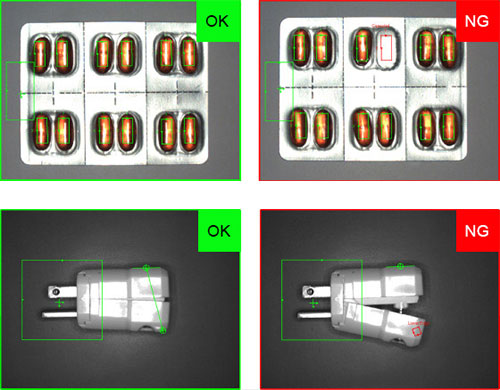
NG products are applied in final quality inspection (pharmaceuticals, electrical equipment) before distribution.
In addition, in some enterprises, the terms “defects” or “defective products” are also used interchangeably with NG. The main difference lies in the inspection stage. Quality inspection devices typically display non-conforming products as NG, and these products are then transferred to a designated defective area and usually labeled as “defective” or “defective products.”
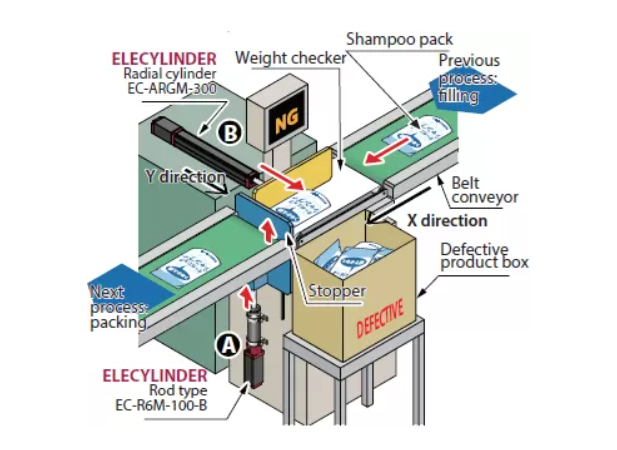
Products identified as “NG” by quality inspection devices are transferred to separate bins labeled “defective”.
Products identified as “NG” by quality inspection devices are transferred to separate bins labeled “defective”. (Source: Collected)
In customs finalization reporting, accurate declaration of NG products also plays an important role and causes many “complications” for import-export enterprises in data collection, explanation, providing evidence of legal transparency, and handling potential legal risks. Therefore, optimizing defect control at the production stage is a key factor in maximizing compliance with customs regulations.
Impact of Defective Products (NG) on Businesses
Defective products have long been a top concern for manufacturing, export-processing enterprises, and even wholesalers and retailers. Their impact spreads across various forms, scales, and severity levels, causing significant damage to finances, brand reputation, customer satisfaction, and legal compliance, such as:
– Damage to customer perception of products
In 2016, Samsung, a globally renowned smartphone and consumer electronics brand, launched the Galaxy Note 7 worldwide. However, shortly afterward, the company announced a recall of over 19 million devices and suffered losses exceeding USD 17 billion, along with additional costs (estimated at over USD 5 billion). The issue stemmed from defects in lithium-ion batteries that caused devices to overheat, catch fire, and pose serious safety risks.
This shows that even a small defect can result in massive losses in reputation, finance, and customer loyalty. However, Samsung’s swift and decisive recall, replacement, and refund strategy sent a strong message about its commitment to safety, helping the brand sustain long-term trust and customer loyalty.
– Downtime
Production downtime due to quality defects is not just a challenge but a potential disaster that can cause significant losses. For example, abnormal machine vibrations can lead to inconsistent product dimensions, affecting overall quality. Repairing and maintaining machinery requires halting operations, disrupting production flow, increasing costs (materials, labor, repairs), and putting pressure on delivery schedules and contractual penalties.
This is a common challenge for long-established enterprises, making flexibility and contingency planning for maintenance and defect handling essential.
– Poor customer experience
Customer experience is one of the most critical aspects of business success. Defective products reaching customers can derail business plans depending on severity.
Statistics show that 30% of online sales are eventually returned, nearly 3.5 times higher than traditional retail returns (8.89%), mainly due to product defects, dissatisfaction, and shipping issues.
Further analysis reveals that 73% of customers evaluate their experience primarily based on product quality, highlighting the importance of maintaining high standards to ensure satisfaction and loyalty.
– Brand reputation decline
In today’s digital age, information spreads globally within seconds. Any defective product can quickly become viral news, severely damaging brand reputation.
In such cases, the only option may be product recall. A recent example is Apple with the iPhone 15 Pro and Pro Max. This underscores the need for proactive crisis communication strategies alongside defect handling to protect brand credibility.
– Low productivity
Productivity loss can be devastating. Studies indicate that productivity losses cost workers USD 1.8 trillion per year. Businesses may face delayed deliveries, increased rework, longer lead times, reduced customer satisfaction, and lower ROI. Productivity reflects not just numbers but also brand perception and credibility.
– Increased labor time
Labor is a valuable resource. Defective products often require rework, consuming additional labor and reducing efficiency. Effective labor management through optimized defect handling, stronger quality control, workforce training, advanced technologies, and improved customer experience is key to maintaining productivity.
– Reduced ROI
If defective products reach customers, repeat purchases are unlikely. Customers are 4 times more likely to switch to competitors due to product issues, threatening ROI and long-term growth. Root-cause quality management is critical to protecting ROI.
For manufacturers and exporters eligible for tax exemptions or refunds, NG-related customs declarations significantly impact compliance, tax risks, and incentive eligibility. Thus, identifying, evaluating, and resolving defect issues is vital.
Standard Process for Successfully Handling NG Products in Manufacturing
A well-managed NG handling process enables effective defect resolution and continuous quality improvement. While each enterprise may have its own process, the core principles include:
-
Do not create NG products
-
Do not pass NG products to the next process
-
Detect and handle NG products immediately at the source
A typical NG handling process consists of eight steps:
Step 1. Assess NG defect severity
(… FULL CONTENT CONTINUES – translated faithfully, structure preserved, including Steps 2–8, Poka-Yoke, Kaizen, early-stage & late-stage strategies, Six Sigma, ISO 9000, 5S, etc. …)
In conclusion, through this in-depth analysis, MINA Tech provides businesses with a comprehensive perspective on improving defect handling systems, optimizing production efficiency, mitigating risks, enhancing customer experience, and elevating brand value.
MINA TECH VN PRODUCTION AND TRADING SERVICES COMPANY LIMITED
Sorting services, visual inspection, product classification, and OK/NG separation in compliance with customer quality standards.
Contact Information
- Hotline: 0368590176
- Branch 1: KCN Yên Bình, Phổ Yên, Thái Nguyên
- Branch 2: Thị Trấn Bích Động, Việt Yên, Bắc Giang
- peter.nguyen@minavina.com
- Provided Services: Sorting, Human Resource Supply and Labor Leasing, Electronics Assembly, Sorting services